When people think of the world’s most valuable gemstones, diamonds are often the first thing that comes to mind.
But did you know that some exceptional sapphires can be worth more than certain diamonds—sometimes dramatically more?
So, why are some sapphires so expensive?
The answer is not simply their size or carat weight. Much like diamonds, the value of a sapphire depends heavily on its quality, rarity, origin, treatment, and overall beauty.
And when all of these exceptional qualities come together in a single stone, the price can be astonishing.
What Is a Sapphire?

A sapphire belongs to the mineral family known as corundum, the same mineral family as ruby.
While corundum can occur in many different colors, the word “sapphire” is most famously associated with blue sapphire, which remains one of the most sought-after varieties in the gemstone market.
Sapphire is also an extremely durable gemstone.
It measures approximately 9 on the Mohs scale of hardness, making it second only to diamond, which measures 10.
This combination of beauty, rarity, durability, and historical significance has made sapphire one of the world’s most important precious gemstones.
Although diamonds often command higher prices in many parts of the commercial market, this is not an absolute rule.
An exceptionally rare, untreated, high-quality sapphire with prestigious origin can potentially be more valuable per carat than many diamonds.
Sapphire Value Is Not Determined by Carat Weight Alone
Imagine two sapphires that both weigh exactly 1 carat.
Does that mean they should have the same price?
Absolutely not.
One could be worth significantly more than the other because carat weight is only one part of the equation.
What truly makes a sapphire valuable is the combination of its color, clarity, treatment, origin, and cut.
Here are five important factors that can dramatically affect sapphire value.
1. Color – One of the Most Important Factors in Sapphire Value
When evaluating a sapphire, Color is often considered one of the most important characteristics.
High-quality blue sapphires are generally admired for having an attractive blue hue with strong saturation and a pleasing tone.
However, there is a common misconception:
Darker does not always mean better.
If a sapphire becomes too dark, it may absorb too much light, causing the stone to appear almost black in certain lighting conditions.
An exceptional sapphire should have enough saturation to display a rich blue while still remaining bright, vivid, and visually lively.
That balance can have an enormous impact on value.
2. Clarity – How Clean Does the Sapphire Look?
Clarity refers to the inclusions and internal characteristics found inside a gemstone.
Natural sapphires commonly contain inclusions because they formed naturally within the Earth.
In general, sapphires with fewer distracting inclusions and better transparency are more desirable, especially when the stone still displays beautiful color.
However, a sapphire does not need to be completely flawless to be valuable.
In fact, certain microscopic inclusions can help gemologists understand whether a sapphire is natural and may even provide clues about its geological origin or treatment history.
What matters is how much the inclusions affect the stone’s appearance.
Important questions include:
- Are the inclusions visible to the naked eye?
- Are they located in the center of the stone?
- Do they reduce transparency?
- Do they make the sapphire appear cloudy or dull?
A sapphire that appears clean, bright, and transparent without distracting inclusions will generally be more desirable than one that looks heavily included or cloudy.
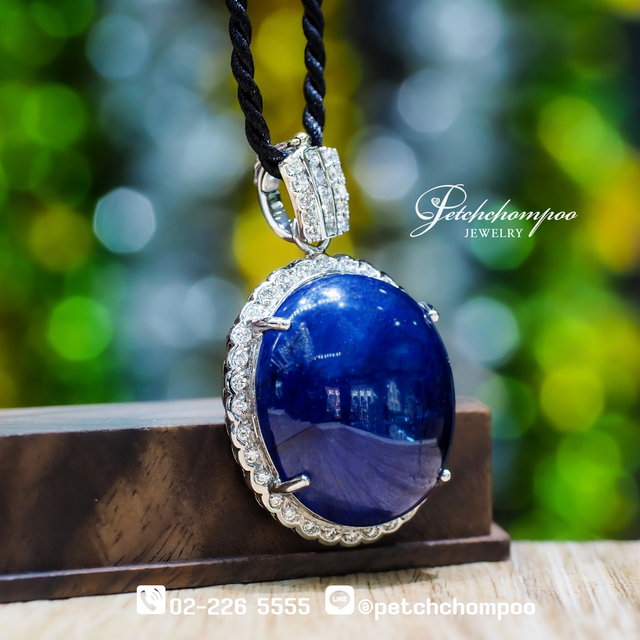
3. Treatment – Heated vs. Unheated Sapphire
One of the most important factors affecting sapphire value is Treatment.
Heat treatment has been used in the gemstone industry to improve the appearance of sapphires, particularly their color and clarity.
A heated sapphire is still a genuine sapphire.
Heat treatment does not automatically mean the gemstone is fake.
In fact, heated sapphires are widely accepted in the gemstone market.
However, there is another category that attracts significant attention from serious collectors:
Unheated sapphires.
An unheated sapphire has not undergone heat treatment to improve its appearance.
When a sapphire naturally possesses exceptional color and clarity without heat treatment, it can be considerably rarer.
And rarity matters.
A beautiful, high-quality unheated sapphire may therefore command a significant premium compared with a similar-looking heated sapphire.
For collectors, documented evidence that an exceptional sapphire is unheated can be extremely important to its value.
4. Origin – Where the Sapphire Comes From
The origin of a sapphire can also influence its desirability and market value.
Important sapphire-producing regions have historically included places such as:
Sri Lanka, Myanmar, Madagascar, Cambodia, and Kashmir.
Among the most legendary are Kashmir sapphires.
Fine Kashmir sapphires are celebrated for their exceptional blue appearance, often described as having a soft, velvety quality.
Some display the highly desirable cornflower-blue appearance, with a rich but beautifully balanced saturation.
Their reputation is not based on color alone.
Historical Kashmir production was limited, and fine stones from this origin are exceptionally rare in today’s market.
Because of this combination of beauty, history, and scarcity, important Kashmir sapphires can achieve extraordinary prices.
However, origin alone does not automatically make every sapphire valuable.
The individual quality of the gemstone remains essential.
5. Cut – Bringing the Sapphire to Life
Cut has a major influence on how beautiful a sapphire appears.
Unlike diamonds, colored gemstones are often cut with the goal of balancing several characteristics at once, including:
Color, brightness, weight retention, proportions, and overall appearance.
A well-cut sapphire can allow light to interact with the stone beautifully, helping it appear bright, lively, and visually balanced.
A poorly proportioned sapphire, on the other hand, may appear too dark or show areas where light passes through the stone without returning effectively to the viewer.
This phenomenon is sometimes referred to as a window.
The right cut can enhance a sapphire’s color and brilliance, transforming an already beautiful gemstone into something extraordinary.
And once an exceptional sapphire is set into a beautifully designed piece of fine jewelry, craftsmanship and design can add even more value to the finished piece.
So, Why Can Some Sapphires Be More Expensive Than Diamonds?
Now we have the answer.
A sapphire is not valuable simply because it is large.
Its value comes from a much more complex combination of factors:
Color + Clarity + Treatment + Origin + Cut + Rarity
Imagine finding a sapphire with exceptional blue color, high transparency, beautiful proportions, no heat treatment, and a prestigious historical origin.
That combination is extraordinarily difficult to find.
And when rarity meets exceptional beauty, the value can rise dramatically.
This is why two sapphires of exactly the same carat weight may have completely different prices—and why an exceptional sapphire can sometimes be worth more than a diamond.
The Most Expensive Sapphire Is Not Necessarily the Biggest
When choosing a sapphire, do not judge the stone by carat weight alone.
A larger sapphire is not automatically a better sapphire.
Look at the quality of its color.
Examine its transparency and inclusions.
Find out whether it has undergone treatment.
Consider its origin when reliable laboratory documentation is available.
And pay attention to how well it has been cut.
Because in the world of fine gemstones, rarity and quality often matter far more than size alone.
And that is exactly why some sapphires can reach prices that truly make you stop and stare.